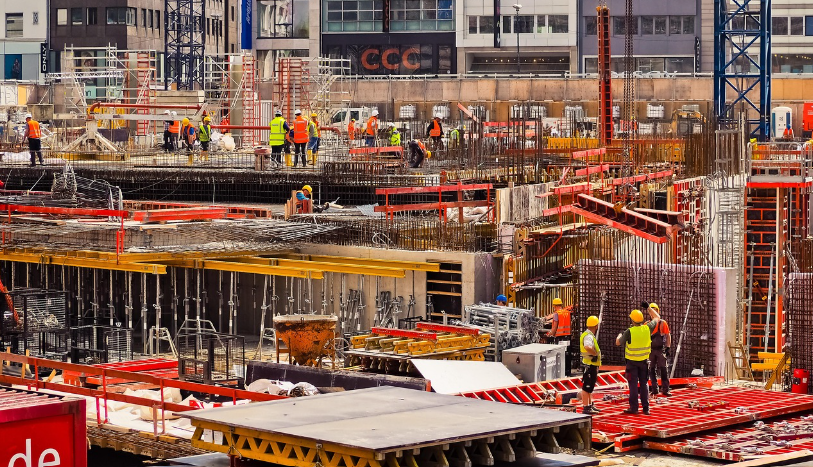
Canada’s construction industry has never seen a skilled worker shortage quite like this — and for qualified immigrants, it’s a real chance to find rewarding work. With billions already flowing into new homes, transit lines, energy projects, and public infrastructure across the country, employers are in a race to hire fast enough. If you’re a senior construction professional with a background in management, engineering, or a specialized trade, you can command $135,000 or more.
Lots of companies are even ready to sponsor work visas if it means filling those crucial positions. This guide will show you everything you need — from the highest-paying jobs, where to look, what actually qualifies you, and how to secure employer sponsorship.
What Construction Jobs Are Most in Demand in Canada?
BuildForce Canada crunched the numbers: the industry needs to bring in over 309,000 new workers by 2030. That’s because nearly a quarter of current construction workers are heading toward retirement, while demand for new projects shows no sign of slowing. Even though construction projects keep popping up everywhere, the workforce hasn’t really grown in the past three years, and that gap just keeps getting wider.
The most in-demand jobs at the $135K+ level all come with a heavy dose of leadership, technical expertise, or project management. We’re talking about construction managers, senior project managers, project directors, civil engineering leads, superintendents, estimating managers, and specialized trades pros — like industrial electricians, power engineers, or elevator mechanics, especially on big energy and infrastructure projects.
If you’ve heard about Canada’s housing crunch, you know the problem is massive. Cities are adding new high-density zones, building transit lines in Toronto, Vancouver, and Calgary, and tackling large LNG and energy projects in Alberta and BC — all at the same time. And every one of these projects is chasing the same handful of experienced professionals.
Types of High-Demand Construction Job Opportunities in Canada
But the $135,000+ salary range isn’t limited to just a few specialty jobs. Across Canada’s construction industry, workers from multiple backgrounds and skill sets can reach or even surpass that level — as long as they have the right experience and expertise.
| Job Title | Average / Top Salary (CAD) | Experience Required |
|---|---|---|
| Construction Manager | $115,000 – $163,000+ | 8–15 years |
| Senior Project Manager | $120,000 – $160,000+ | 7–12 years |
| Project Director (ICI) | $135,000 – $200,000+ | 10–20 years |
| Construction Superintendent | $100,000 – $145,000+ | 7–15 years |
| Estimating Manager | $110,000 – $155,000+ | 8–12 years |
| Civil / Structural Engineer | $100,000 – $150,000+ | 5–10 years |
| Industrial Electrician (Red Seal) | $90,000 – $150,000+ | 5–10 years |
| Power Engineer | $100,000 – $160,000+ | 5–12 years |
Construction Managers are the most broadly in-demand senior role. The average construction manager salary in Canada is CAD $108,653 to $115,051 according to Indeed and Glassdoor salary data as of early 2026, with top earners reaching $163,000 to $232,000 annually, particularly in Alberta’s industrial sector and on large Vancouver commercial builds.
Project Directors overseeing institutional, commercial, and industrial (ICI) projects represent the highest compensation tier in non-engineering roles, with salaries regularly hitting $135,000 to $200,000+ on major transit and infrastructure programmes.
Red Seal Tradespeople — particularly power engineers, industrial electricians, and elevator mechanics — earn $90,000 to $150,000+ in Alberta’s energy sector and on major infrastructure projects. The Red Seal Programme sets national standards, and certification allows tradespeople to work across all Canadian provinces without retraining, making it an extremely valuable credential for immigrants.
Construction Superintendents managing day-to-day site operations on large commercial and industrial projects earn $100,000 to $145,000+, with Fort McMurray, AB, roles pushing beyond that due to remote-site premiums and rotation pay.
Top Locations for Job Seekers
Where you work in Canada determines not only your salary but also your access to sponsorship, provincial immigration programmes, and long-term career growth.
Greater Toronto Area (GTA), Ontario is the single largest construction market in Canada. The GTA has been one of the biggest construction markets in the country for nearly a decade, with massive transit expansion, high-rise residential development, and commercial builds all running concurrently. Construction managers, senior project managers, and civil engineers are in exceptionally high demand. Salaries in the GTA are highly competitive and visa sponsorship is common among large ICI contractors.
Calgary and Edmonton, Alberta offer the strongest combination of high salary and low cost of living for construction professionals. Alberta has no provincial sales tax, the lowest provincial income tax in Canada, and a booming industrial and energy construction sector. Fort McMurray, in particular, produces the highest construction salaries in the country for site-based roles due to remote-site premiums. Cities with the strongest demand and highest earnings for Construction Managers include Fort McMurray, Calgary, and Edmonton.
Vancouver, BC has a booming real estate market with a strong and sustained pipeline of infrastructure projects. The Vancouver Lower Mainland encompasses over ten cities and has consistent demand for all construction management and trades disciplines. Salaries carry a 15–25% premium to offset BC’s higher cost of living.
Ottawa, Ontario is growing rapidly as a construction hub, with federal infrastructure investment, new residential development, and government facility projects all driving consistent demand for experienced construction professionals.
Montreal, Quebec offers above-average wages due to major infrastructure and commercial development, and benefits from Quebec’s simplified LMIA process for construction-related shortage occupations. Note that French proficiency is a strong advantage — and often a requirement — for roles in the province.
Atlantic Canada (Halifax, Moncton, St. John’s) is an emerging opportunity zone for construction immigrants, with moderate wages, affordable living, active provincial nominee programmes, and growing demand in healthcare infrastructure and municipal construction.
Key Requirements and Eligibility Criteria for Immigrants in Canada
Meeting these requirements before you apply protects your timeline and signals to employers that you are ready to begin work quickly — which matters enormously in a tight labour market.
Education: A degree or diploma in civil engineering, construction management, or a related technical discipline is required for managerial and engineering roles. For trade roles, completion of a recognised apprenticeship programme is standard. Foreign credentials should be assessed through WES (World Education Services) to establish Canadian equivalency.
Work experience: Roles paying $135,000+ demand a minimum of seven to fifteen years of relevant hands-on experience, with demonstrated leadership on large commercial, infrastructure, or industrial projects. Document your projects clearly — employers want to see scope, budget, team size, and outcome.
Red Seal certification (for trades): This is the national benchmark for skilled tradespeople and dramatically improves both your immigration points and your employer appeal. If you hold a trade certification from another country, the Red Seal Programme and provincial trade regulators provide assessment and recognition pathways.
Language proficiency: Advanced English is required across all provinces except Quebec, where French is essential. Language test results — IELTS or CELPIP — are required for most immigration streams. Strong scores also add Comprehensive Ranking System (CRS) points to your Express Entry profile.
Criminal record clearance: A police clearance certificate from your home country is mandatory for all work permit and immigration applications.
Professional designations: For management roles, credentials such as a PMP (Project Management Professional) or Gold Seal Certification from the Canadian Construction Association significantly strengthen your application. For engineering professionals, registration as a P.Eng with the relevant provincial engineering body is the long-term goal, with Engineer-in-Training (EIT) status available while you complete requirements.
How to Successfully Apply for Visa Sponsorship
Applying for a $135K+ construction role with visa sponsorship requires strategy, not volume. Here is the process that works.
Start with the right job boards. Job Bank Canada (jobbank.gc.ca), Indeed.ca, LinkedIn, and Glassdoor.ca all host sponsored construction listings. Specialist construction recruitment platforms including Red Seal Recruiting, Outpost Recruitment, Hays Construction Canada, and Primus Workforce actively place international candidates with LMIA-approved employers. Search specifically for “LMIA approved,” “visa sponsorship available,” “open to international applicants,” or target NOC codes directly — Construction Managers are NOC 70010, Civil Engineers are NOC 21300.
Go directly to major contractors. The firms most consistently sponsoring senior construction hires include EllisDon, PCL Construction, Kiewit Corporation, Graham Construction, Bird Construction, Pomerleau, and SNC-Lavalin (AtkinsRéalis). These companies have established LMIA infrastructure and sponsor dozens of international construction professionals annually.
Build a Canadian-format resume. Two pages maximum. Lead with your most significant project accomplishments — total project value, team size, scope, and deliverables. Remove photos, date of birth, and marital status. Tailor every application. Generic CVs do not pass Applicant Tracking System (ATS) screening at major contractors.
Get your credentials moving. Submit your WES application, contact your provincial trade regulator, and begin PMP or Gold Seal registration before you start applying. Showing active progress on credential recognition reduces the perceived risk for an employer considering sponsorship.
How to Secure Visa Sponsorship
Securing sponsorship comes down to making the employer’s investment feel low-risk and high-return.
Target experienced LMIA sponsors first. Companies that have sponsored international construction workers before move through the process faster, understand the cost, and are less likely to withdraw an offer midway. Research which contractors in your target province have a history of LMIA-backed hires using Job Bank’s employer search tools.
Network within the Canadian construction community. Join the Canadian Construction Association (CCA), the Ontario General Contractors Association (OGCA), or provincial equivalents. Attend virtual industry events, connect with Canadian construction professionals on LinkedIn, and reach out directly to hiring managers. Many $135K+ construction roles are filled through professional networks before they reach public job boards.
Demonstrate immediate value. At the senior level, employers are not sponsoring potential — they are sponsoring someone who can step into a complex project and deliver. Make your application concrete: specific projects, specific outcomes, specific certifications. A candidate who immediately communicates ROI removes the hesitation that often delays sponsorship decisions.
Consider provincial nominee programmes (PNPs). Alberta, Ontario, BC, and Manitoba all have construction-specific or skilled trades streams within their PNPs. A provincial nomination adds 600 CRS points to your Express Entry profile, making permanent residence virtually certain. Targeting provinces with active construction streams shortens your entire immigration timeline.
Visa and Work Permit Pathways for Construction Workers
LMIA-backed Work Permit (TFWP High-Wage Stream): The primary route for all $135K+ construction roles. Your employer obtains an LMIA from ESDC confirming no Canadian candidate is available. Processing takes four to twelve weeks for high-wage roles. The permit is typically valid for one to three years and allows you to apply for PR through Express Entry or a PNP during your employment period. Under 2026 rules, high-wage LMIA positions are subject to an eight-week advertising period before submission.
Express Entry with LMIA Job Offer: A valid LMIA-backed job offer adds 200 CRS points to your Express Entry score. Combined with construction management or civil engineering NOC classification under TEER 1 or 2, strong language scores, and a provincial nomination, an invitation to apply for permanent residence becomes highly achievable.
Provincial Nominee Programmes (PNPs): Alberta’s Opportunity Stream, Ontario’s Employer Job Offer streams, and BC’s Skills Immigration Programme all have pathways for experienced construction and trades professionals with employer job offers.
Intra-Company Transfer (ICT): If you work for a multinational contractor — such as Kiewit, AECOM, or AtkinsRéalis — with a Canadian office, an ICT work permit allows you to transfer to the Canadian operation without an LMIA. This is one of the fastest routes into a senior Canadian construction role.
Jobs + Sponsorship Secured
In 2026, Canada’s construction industry isn’t just open to international talent—it’s on the hunt for skilled professionals, especially those with senior or specialized experience. Salaries start at $135,000 and often climb higher because companies know they need to pay to attract the best. With a real shortage of workers, flexible immigration options, and robust provincial nominee programs, this is hands-down one of the best ways for construction experts to start a new chapter in Canada—and get paid well for it. Just make sure your qualifications are in order, look for opportunities in the right places, and go into job talks knowing you’ve got the upper hand. Right now, the industry needs you more than ever.